
The Nifty IT index rose by 5.14 per cent on Friday (January 12), marking its best performance in a day since July 2020, followed by another 1.9 per cent rally on Monday. With this, the index, which tracks the share prices of India's 10 biggest information technology (IT) services companies, has increased 7.1 per cent in the past two sessions. However, the substantial rally in the index occurred at a time when India's four largest IT companies reported their worst quarterly performance in over five years.

Among the Sensex firms, UltraTech Cement, Reliance Industries, ICICI Bank, HDFC Bank, Bharti Airtel, IndusInd Bank, State Bank of India, Tata Consultancy Services, Larsen & Toubro, Kotak Mahindra Bank and State Bank of India were the major gainers. In contrast, Tata Motors, Maruti, Axis Bank, Mahindra & Mahindra, ITC, NTPC, Tata Steel and Bajaj Finserv were the major laggards.

Among the Sensex firms, Infosys, Bharti Airtel, NTPC, Tata Motors, IndusInd Bank, Bajaj Finance, ICICI Bank, Tech Mahindra, Titan and Axis Bank were among the major laggards. Tata Steel, State Bank of India, Mahindra & Mahindra, Maruti and Nestle were the gainers.

The ongoing second quarter earnings, movement of oil benchmark Brent crude and the uncertainty in the Middle East would dictate terms in the domestic markets this week, analysts said. Furthermore, the activities of Foreign Institutional Investors (FIIs) will also influence trading in the markets. "A slew of earnings reports from heavyweights expected this week will significantly impact market direction.

Bolstered by an impressive performance in the global specialty business and outstanding results in the Indian market, Sun Pharmaceutical Industries, the largest pharmaceutical (pharma) company in the country, showcased a strong performance in the July-September quarter (second quarter, or Q2) of 2023-24 (FY24).

Foreign Portfolio Investors (FPIs) continued their buying spree and poured close to Rs 4,800 crore in the Indian equity markets in the first week of January driven by confidence in the country's robust economic fundamentals. Additionally, they injected Rs 4,000 crore in the debt market during the period under review, data with the depositories showed. With expectations of a prolonged decline in US interest rates in 2024, there is an anticipation that FPIs will likely escalate their purchase, particularly in the initial months of the New Year leading up to the general elections, V K Vijayakumar, chief investment strategist at Geojit Financial Services, said.
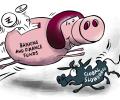
Even as banks and finance companies are reporting record-high earnings, their weighting in the benchmark National Stock Exchange Nifty50 Index has seen a downward trajectory. Investors expect a stronger performance from other sectors in the new year. Currently, banking, financial services and insurance (BFSI) companies collectively hold a weighting of 34.5 per cent, down from 36.7 per cent at the end of December 2022 and a record high of 40.6 per cent at the end of December 2019. This represents the sector's lowest weighting in the index since December 2021 when it stood at 33.7 per cent.

Once declared a dud stock, Suzlon has generated stellar returns for investors thus far this calendar year. On a year-to-date (YTD) basis, Suzlon's share price has doubled investor wealth by soaring 109.35 per cent on the bourses. By comparison, the benchmark BSE Sensex has gained just 11.2 per cent.

Foreign Portfolio Investors (FPIs) selling spree continued as they dumped Indian equity worth over Rs 5,800 crore this month so far on rising interest rates and geopolitical tensions in the Middle East. This came after such investors withdrew Rs 24,548 crore in October and Rs 14,767 crore in September, data with the depositories showed. Before the outflow, FPIs were incessantly buying Indian equities in the last six months from March to August and brought in Rs 1.74 lakh crore during the period.

Dixon Technologies' January-March quarter (Q4) results came in well below expectations, but the potential for signing up a new mobile client, and plans for backward integration into display manufacturing kept investors happy. Dixon's Q4FY24 revenue grew 52 per cent year-on-year (Y-o-Y) to Rs 4,660 crore, below Street consensus, due to weakness in consumer electronics (Rs 890 crore) and home appliances (Rs 294 crore) segments.

PSB executives said loans to group holding company IL&FS and entities might still be treated as "standard".

Industrial metals (ferrous and non-ferrous) suffered great volatility once the Ukraine War began in February 2022. First, there was a sharp price rise due to fears of supply disruption, followed by weak global demand. China's weakness and rolling lockdowns have hit production and demand.

Investors are increasingly turning optimistic about shares of new-age companies. From broad-based 'sell' calls, analysts are giving thumbs up to Zomato, Paytm, and FSN e-Commerce Ventures-owned Nykaa as these companies have shifted focus to sustainable profits. The shares of Zomato hit a fresh 52-week high of Rs 126 apiece on the BSE on November 7, having rallied 15.4 per cent in one week.

Tata Communications has seen analyst upgrades after reporting Q3FY24 results. The biggest factor is the visible signs of a turnaround in its new acquisition, Kaleyra. The consolidated revenue grew 16 per cent Q-o-Q to Rs 5,630 crore led by 15 per cent Q-o-Q improvement in the data segment.

The rising goods and services tax (GST) and personal income-tax collections may bolster the Narendra Modi government's ability to announce new schemes or enhance existing ones.

At least three brokerages, two domestic and one global, have said the company could cut its revenue growth guidance again in dollar terms

The fast-moving consumer goods (FMCG) sector has underperformed the Nifty over the past year as its 20 per cent return is trumped by 29 per cent of the benchmark index. The FMCG index saw a 2.2 per cent drop in the last session, while the Nifty lost 1 per cent. FMCG is seen as a defensive segment. The demand for staples like personal care products, groceries and snacks tend to be stable. FMCG companies are consistent dividend-payers.

The country's largest lender State Bank of India (SBI) on Wednesday reported a 55 per cent increase in consolidated net profit at Rs 5,245.88 crore for the second quarter ended September 30 on account of decline in bad loans. The bank's net profit stood at Rs 3,375.40 crore in July-September quarter of the previous fiscal, SBI said in a regulatory filing.

Shares of Mukesh Ambani-owned Reliance Industries Limited (RIL) rose nearly 1 per cent on Tuesday, hitting an intraday high of Rs 2,986.05 per share, after most brokerages reacted positively to the company's March quarter (Q4FY24) results. The bullish outlook stems from Reliance Jio's potential tariff hikes, given the competitive landscape, along with slow but steady improvement in the oil-to-chemical (O2C) vertical.

After a technology upgrade, the Multi Commodity Exchange of India (MCX) appears poised for an improvement in volumes. The premier commodity and forex exchange reported a loss of Rs 19.1 crore in the July-September quarter (second quarter, or Q2) of 2023-24 (FY24). This was attributed to higher software charges payable under an extended service agreement with 63 moons technologies and a one-off cost towards core guaranteed funds (CGF).

ICICI Bank reported good results for the October-December 2023 quarter (Q3), with 24 per cent year-on-year (Y-o-Y) growth in profit after tax (PAT). Net interest margin (NIM) dropped 10 bps quarter-on-quarter (Q-o-Q) to 4.43 per cent. Credit growth was at 19 per cent Y-o-Y (4 per cent Q-o-Q), while deposit growth was at 19 per cent Y-o-Y (3 per cent Q-o-Q).

Growing concerns over slower-than-expected margin recovery, amid weak deposit growth have caught HDFC Bank's investors off guard. HDFC Bank's stock on Wednesday plunged nearly 9 per cent to hit an intraday low of Rs 1,527 on the BSE after reporting weaker-than-expected earnings in the third quarter (October - December) of the current financial year (Q3FY24). The shares of India's biggest private lender closed at Rs 1,536.9, down 8.46 per cent.

'In staples, we have still managed in rural areas.'

HDFC Bank has been conscious in not accepting high-cost deposits, which have resulted in slower growth in October-December, said Sashidhar Jagdishan, managing director and chief executive officer, during an interaction with Goldman Sachs recently. He said during times of tight liquidity, short terms hardened, as was the case in October-December. "Not only did we participate, but we also gave up which came up for maturity," he said.

Since their highs in September, chemical stocks have underperformed the benchmarks and broader indices over the past month with larger players witnessing a 9-22 per cent fall during this period. Expectations of weak September quarter results amid high inventory, demand woes and weak realisations have led to the underperformance.

A prudent guideline for self-employed individuals is to target at least 10 to 15 times their actual annual income when determining life insurance coverage.

Power Grid Corporation (PGCIL) intends to ramp up its capex substantially through the next two financial years. The Public Sector Undertaking (PSU) utility posted flat consolidated revenues of Rs 10,700 crore in the third quarter of the current financial year (Q3FY24) and reported 7 per cent year on year (Y-o-Y) growth in net profit to Rs 4,000 crore. The Q3FY24 capex stood at Rs 3,440 crore and capitalisation at Rs 1,780 crore, taking the 9MFY24 total to Rs 8,700 crore capex and Rs 5,800 crore capitalisation, respectively.

The stock of fast-moving consumer goods major Tata Consumer Products has been reaching new all-time highs on better-than-expected results for the July-September quarter (second quarter, or Q2), strong growth in the food business, and margin gains in the beverage/international business. Most brokerages are positive on the stock, given growth prospects, and believe that rich valuations are justified. The near-term trigger has been the robust operational performance in Q2.

The Ficci survey, which covered 276 units, also revealed that those expecting a fall in their production decreased to 16 per cent in the second quarter from 26 per cent in the first quarter.

Electrical Consumer Durable (ECD) companies like Havells India have seen strong Q4FY24 sales and continuing seasonal demand across fans, air coolers, and room air conditioners (RAC) in addition to business-to-business sales of cables, switchgear, and professional lighting, among others. Havells India's Q4FY24 revenue rose 12 per cent year-on-year (Y-o-Y) to Rs 5,400 crore, in-line with consensus. Strong summer demand led to robust volume growth in fans and RAC and volume growth in cable and wires (C&W) due to infrastructure spending and real estate activity.

Rising crude oil prices and muted passenger traffic in the July-September quarter (second quarter, or Q2) of 2023-24 (FY24) have raised concerns about the profitability of listed aviation players. These two concerns have caused the stock of InterGlobe Aviation (IndiGo), the largest player in the sector, to slip by 11 per cent since its highs at the end of July. Nuvama Research expects yields to cool down in the near term due to seasonality, rising crude oil prices, and higher capacity.

Coal India Limited's (CIL) October-December quarter of financial year 2023-24 (Q3FY24) results have beaten the Street's estimates. Revenue rose 3 per cent year-on-year (Y-o-Y) to Rs 36,200 crore, led by higher volumes and better realisation from Fuel-Supply Agreement (FSA) coal. The blended average selling price (ASP) was down 6 per cent Y-o-Y to Rs 1,727 per tonne, and the FSA ASP was up 3 per cent Y-o-Y to Rs 1,532 per tonne.

Grasim Industries has announced a rights issue of around Rs 4,000 crore with the promoters committed to fully subscribing to their entitlements and to covering any unsubscribed portion. This is to part-fund capital expenditure (capex) of Rs 10,000 crore in a new foray into the paints business. The company has already invested Rs 3,640 crore in the paints business (by Q1FY24). The management has outlined a capex of Rs 5,700 crore for FY24, which includes Rs 4,280 crore allocated for the paints business, of which Rs 1,050 crore has already been spent in Q1FY24.
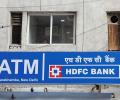
HDFC Bank's market capitalisation (market cap) touched Rs 13 trillion in Thursday's (December 28, 2023) intra-day trades as the largest private sector lender is set to report its sharpest monthly rally in the past two years. At 10:33 AM; HDFC Bank's market cap stood at Rs 13.03 trillion, the BSE data shows. The stock was up 1 per cent at Rs 1,717.90 in intra-day trades on December 29, inching towards its record high of Rs 1,757.80 touched on July 3, 2023.
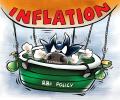
The Reserve Bank of India on Thursday marginally lowered its inflation projection for the current financial year to 5.1 per cent, as Governor Shaktikanta Das said the central bank's monetary policy actions are yielding the desired results. In April, the Reserve Bank had estimated the consumer price index (CPI) based retail inflation at 5.2 per cent during the fiscal 2023-24. CPI inflation fell sharply to 4.7 per cent in April 2023, from 6.4 per cent in February, on the back of favourable base effects, with softening observed across all the three major groups.

SBI Cards & Payment Services reported mixed results for the January-March quarter (Q4) of FY24. While it managed to deliver strong earnings growth, it saw a perceptible decline in net interest margin (NIM) and suffered deteriorating asset quality. Taken together, the market was disappointed with the share dropping 3.5 per cent.

Margins for the oil refining and retailing sector have moved off their peaks, and the average integrated margins (refining plus marketing) for oil marketing companies (OMCs) have normalised. The ascent in crude oil prices, combined with static retail prices, has depressed marketing margins for diesel and petrol. However, the fall in marketing margins has been offset by increased gross refining margins (GRMs).

Tata Motors surpassed Maruti Suzuki (India) (MSIL) to become the most-valuable automobile company, in terms of market capitalisation (mcap), after a gap of seven years. With this, the company's stock hit a new high on the BSE on Tuesday (January 30). The combined mcap of Tata Motors (Rs 285.51 crore) and Tata Motors DVR (Rs 29,119 crore) stood at Rs 3.146 trillion.
The ICICI Prudential Life Insurance Company's net premium income in the third quarter (October - December) of the current financial year (Q3FY24) swelled by 4.9 per cent year-on-year (Y-o-Y) to touch Rs 9,929 crore. Income from investment rose 111.3 per cent Y-o-Y to touch Rs 16,315 crore. The Annual premium equivalent (APE), and new business premium (NBP) increased by 4.8 per cent Y-o-Y. Both declined 7.5 per cent and 5.6 per cent respectively, quarter-on-quarter (Q-o-Q).

Debt-ridden telecom operator Vodafone Idea on Friday reported widening of its consolidated loss to Rs 7,230.9 crore for the third quarter ended December 2021. The company had posted a loss Rs 4,532.1 crore in the same period a year ago. Consolidated revenue from operations declined by 10.8 per cent to Rs 9,717.3 crore from Rs 10,894.1 crore in the year-ago period.
